Badminton demands quick reflexes and sharp technique. To maintain high performance during matches, players need speed, power, agility and endurance. On-court practice builds skill, but a structured fitness training in the gym strengthens the body to support faster movements, stronger shots, and better recovery.
In this blog, we will explore how the right fitness approach can directly improve badminton performance and give players a physical edge.
What Are the Physical Demands of Badminton?
Badminton demands physical fitness, considering the high-intensity nature of the game. Players must respond instantly to the shuttle's direction, often making split-second decisions during fast rallies. Agility and rapid directional changes are equally important, as the game requires constant movement across the court. It becomes difficult to reach the shuttle early and maintain control of the rally without sharp footwork and coordination.
Badminton requires power for smashes, jump shots and sudden lunges. Muscular endurance is essential to sustain performance during long rallies and extended matches without any drop in intensity. Core stability and balance support all movements on court, helping players maintain control while hitting shots from challenging positions. Together, these physical demands highlight why structured fitness training is crucial for improving overall badminton performance.
What Are the Key Fitness Components for Badminton Players?
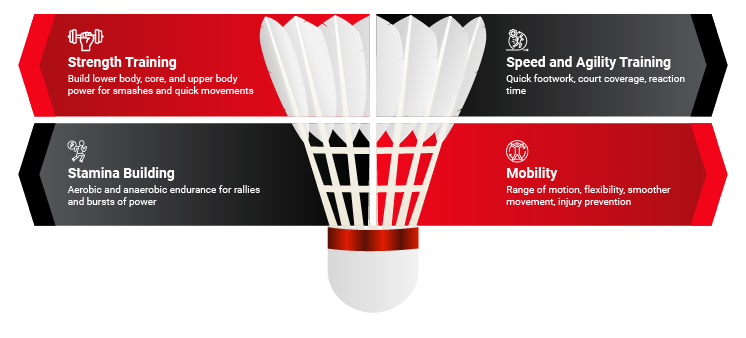
Badminton players must be fit to perform at their maximum capacity. Key fitness components for badminton players are strength training, speed and agility training, stamina building and enhancing mobility. These key components are as follows.
Strength Training
Strength training forms the foundation of physical performance in badminton. Lower body exercises such as lunges and squats build power needed for rapid directional changes. Upper body and shoulder stability are essential for controlled smashes and defensive shots. Moreover, strong core muscles improve balance and shot precision during fast rallies. Strength training enhances explosive power and helps protect joints and muscles.
Speed and Agility Training
Speed and agility allow players to move efficiently across the court and react quickly to the shuttle. Ladder drills and cone drills improve foot speed, coordination, and change-of-direction skills. Plyometric exercises, such as jump squats and bounding movements, develop explosive movement and quicker push-offs. Together, these training methods improve court coverage, reduce recovery time between shots, and help players maintain control during high-speed rallies.
Stamina Building
Badminton requires both aerobic and anaerobic endurance. Aerobic conditioning supports sustained energy levels during long matches, while anaerobic conditioning helps players perform short bursts of intense effort, such as powerful smashes and fast rallies. Interval training is particularly effective because it mirrors match conditions by alternating high-intensity effort with short recovery periods. Strong stamina ensures that players can maintain performance quality without fatigue affecting technique or decision-making.
Mobility
Mobility training improves the range of motion in joints and muscles, which helps efficient movement on the court. Dynamic stretching prepares the body before play by increasing blood flow and flexibility, while joint mobility exercises enhance stability and control. Good mobility reduces the risk of strains and injuries, supports smoother footwork, and allows players to reach difficult shots without losing balance or power.
How Can Players Prevent Injury and Recover Faster During Fitness Training?
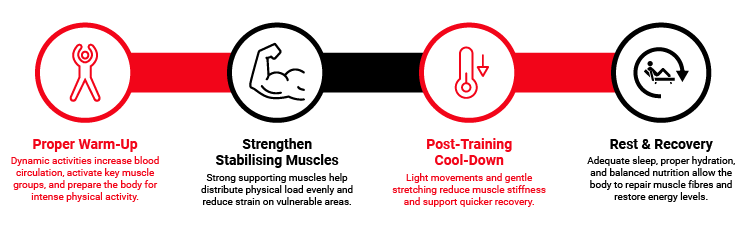
Badminton players need to follow proper strategies to prevent injuries. Players can experience common issues such as ankle sprains, knee strains, shoulder injuries, or lower back discomfort. Understanding these physical demands helps players prepare their bodies to handle the sport's intensity and recover as quickly as possible. The following are a few injury-prevention and fast recovery measures.
Proper Warm-Up
A structured warm-up before training or matches prepares the body for intense physical activity. Dynamic activities such as light jogging, mobility drills, and movement-based stretches increase blood circulation and activate key muscle groups. This preparation reduces muscle stiffness, improves coordination, and reduces the risk of sudden injuries during fast movements on the court.
Strengthen Stabilising Muscles
Strengthening the muscles that support the joints is essential for injury prevention. Exercises that target the core, hips, knees, and shoulders improve stability and body control during lunges, jumps, and overhead shots. Strong supporting muscles help distribute physical load evenly and reduce strain on vulnerable areas such as the knees and shoulders.
Post-Training Cool-Down
Cooling down after training or competition helps the body transition gradually from high intensity to rest. Light movements followed by gentle stretching reduce muscle stiffness and help remove metabolic waste from the muscles. This process supports quicker recovery and prepares the body for the next training session.
Rest and Recovery
Recovery is essential for maintaining consistent performance and preventing overuse injuries. Adequate sleep, proper hydration, and balanced nutrition allow the body to repair muscle fibres and restore energy levels. When players prioritise recovery, they can train more effectively, reduce fatigue, and maintain long-term physical health.
What Are the Common Fitness Mistakes in Badminton Training?
Common mistakes that players make while playing badminton are:
- Many players focus only on playing matches and neglect structured fitness training, which limits their endurance on the court, ultimately affecting their performance in the long run.
- Ignoring proper warm-up routines before training increases the risk of muscle strains and reduces mobility during fast movements.
- Overtraining without allowing sufficient recovery time can lead to fatigue, creating a higher risk of injury.
- Some players prioritise upper-body strength while neglecting leg strength, but powerful footwork and quick directional changes rely heavily on the lower body.
- Skipping agility and footwork drills prevents players from developing the speed and reaction time required for competitive badminton.
- Random gym exercises that do not support badminton-specific movement patterns or on-court performance reduce training effectiveness.
- Poor attention to core strength reduces balance and stability.
- Players sometimes train at high intensity every day without balancing technical practice, strength training, and recovery sessions.
- Failing to maintain proper hydration and nutrition during training can reduce stamina and slow down physical recovery.
Your Court. Your Community.
Become part of Smash Squad — the exclusive badminton club for players who value competition, community, and excellence.
Join Smash SquadFinal Thoughts
Structured strength and conditioning is essential for badminton players who want to perform at their best. Gym training builds the speed, power, agility, endurance, and stability required to move efficiently on the court and execute shots effectively. Fitness training combined with regular on-court practice enhances skill execution, reduces injury risk, and supports faster recovery between rallies and training sessions. Consistency and a balanced approach to both gym and court work are key to achieving long-term success in badminton.
Latest Post