In a badminton game, the shuttlecock defines the feel of a shot. It adds precision and control to the shots. The design of the shuttle, material, structure and upkeep directly affect consistency and performance. This log breaks down the composition, purpose, and maintenance of shuttlecocks, explaining how different types of nylon and feathers differ, how their structure influences play, and how proper care can extend their lifespan for a smoother, more reliable game.
What is a Shuttlecock?
A shuttlecock is the projectile used in badminton. It is lightweight and has a cone shape that players hit back and forth across the net. Shuttle’s shape allows it to stay stable in the air and slow down quickly after being struck, making badminton rallies fast yet controlled.
Components of a Shuttlecock
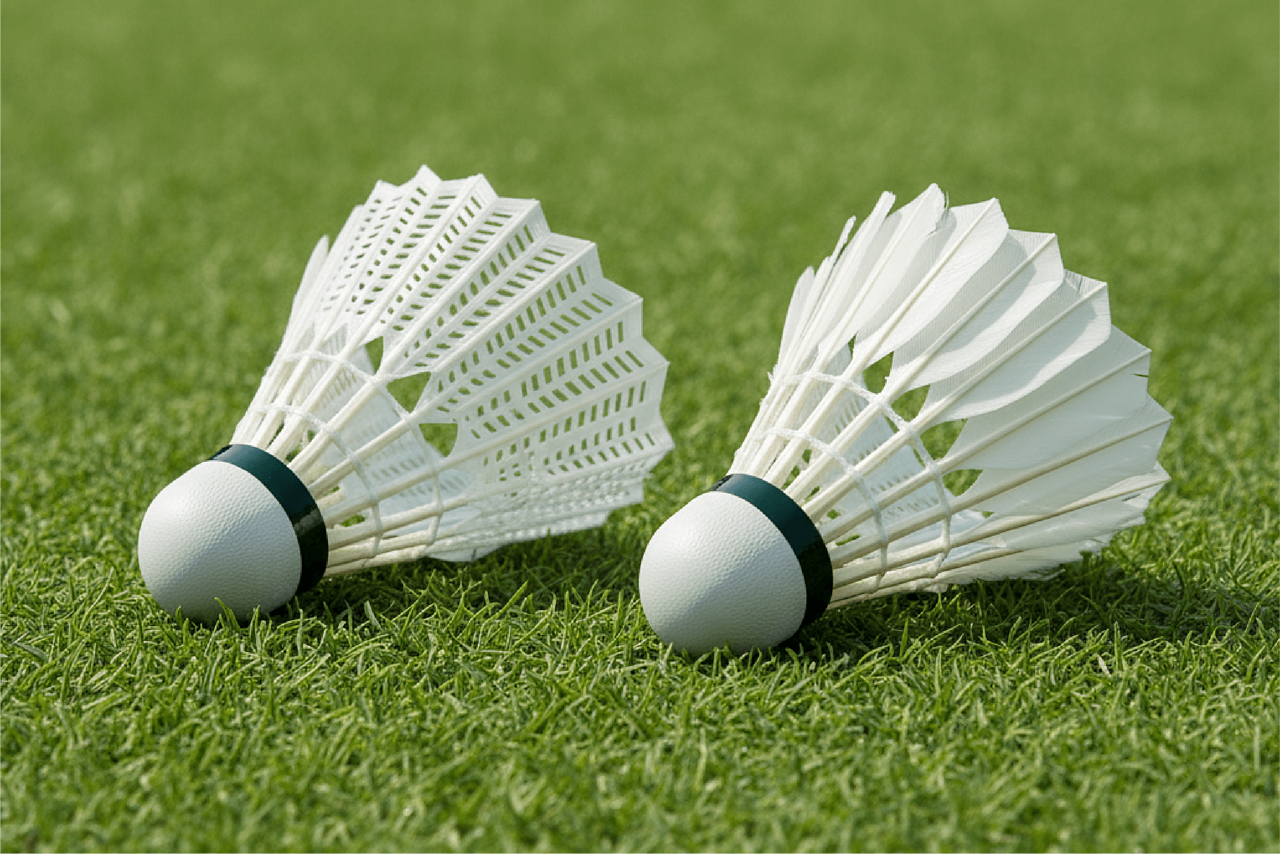
Shuttlecocks are generally made of two components: one is the skirt, and the second is the base. Each of these parts of the shuttle serves a purpose. Its structure controls the movement and travel across the court.
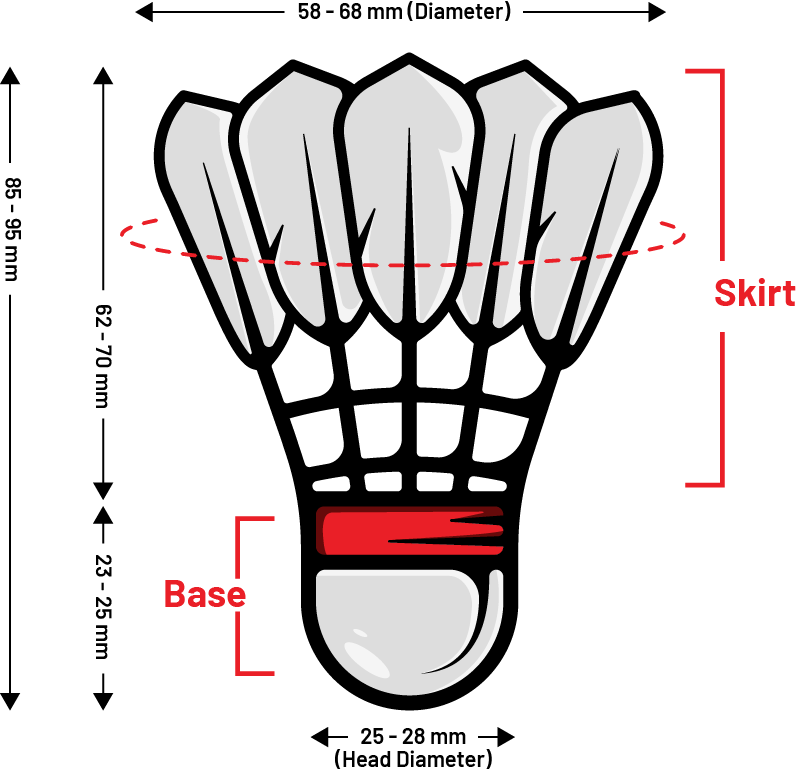
Skirt (Cone)
The skirt forms the upper, cone-shaped part of the shuttlecock. It forms the aerodynamic structure of the shuttle and determines how it flies, slows down, and stabilises during the game.
The standard diameter of a badminton skirt is between 58 and 68 mm, and the length is between 62 and 70 mm.
The skirt of a shuttlecock is made of two types of material: feather or nylon.
- Feather Skirts: Made from goose or duck feathers, carefully arranged to form a perfect cone. Each feather is positioned at a specific angle to ensure consistent air resistance and spin.
- Nylon Skirts: Crafted from moulded synthetic nylon to mimic the feather pattern. It is a more durable and flexible material for a shuttle skirt.
Base (Cork)
The rounded bottom section of the shuttle, where players hit with a racket, is the base of the shuttlecock. This is the only part of the shuttlecock that makes contact with your racket strings.
The diameter of a shuttlecock’s base is approximately 25-28 mm and has a length of 23 to 25 mm.
he base is made of natural cork, covered with a thin layer of leather or synthetic material for protection. For training, a synthetic composite cork is used, which is a mix of natural cork with synthetic material.
What are the Functions of the Skirt and Base of the Shuttlecock?
The skirt and base of the shuttlecock have very distinct functions. It affects the feel of the game. The cone part of the shuttle is responsible for the aerodynamics, while the base causes the impact response and flight initiation. The detailed functions of both parts are defined below.
| Skirt (Cone) | Base (Cork) |
|
|
Types of Shuttlecocks Used in Badminton
Shuttlecocks come in two main types: feather shuttlecocks and synthetic shuttlecocks. Each of these types serves different playing needs and skill levels. The brief description of each type is as follows.
Feather Shuttlecocks
Feather shuttles are traditionally used in professional and competitive badminton. This shuttle is made with 16 closely matching feathers. Usually, a duck or goose feather is used, which is also taken from the same wing. Goose feathers are durable and provide consistent flight, whereas duck feathers are soft and a more affordable choice for daily play.
Feather shuttles offer a smooth, accurate trajectory and a more natural feel during rallies. These shuttles are delicate and wear out quickly, especially when playing in humid or damp conditions.
Learn more: Goose Feather Vs Duck Feather Shuttlecocks: Which Should You Choose?
Synthetic Shuttlecocks
Synthetic shuttlecocks, also known as nylon shuttlecocks, are commonly used for training and recreational play. The skirt is made from nylon or other durable plastics, and the base is typically composite cork or foam. They last much longer than feather ones and perform well across varying conditions. They are not a replacement for a feather shuttle, but they are cost-effective, durable, require low maintenance, and are ideal for beginners or indoor clubs.
Maintenance Tips to Make Your Shuttlecocks Last Longer
It’s important to take proper care of your shuttlecocks if you want consistent flight and longer use. Even high-quality shuttles can wear out quickly when they are not taken care of. With a few simple habits, you can preserve their shape, texture, and performance for many more matches.
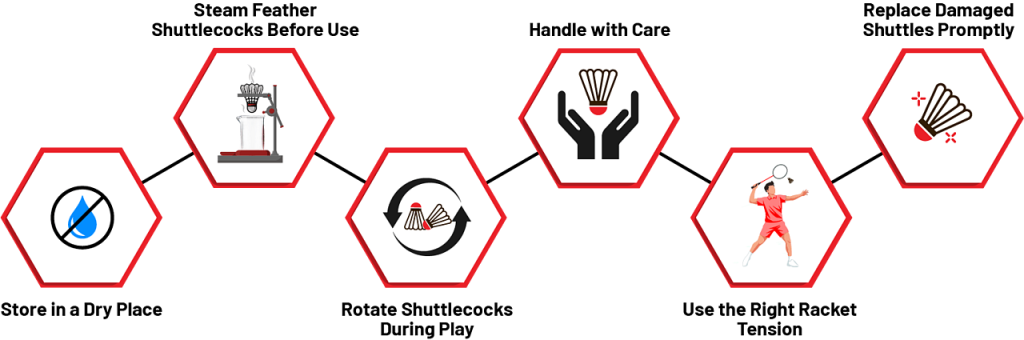
Store in a Dry Place
Humidity and heat can deform feather shuttlecocks. Keep them in their original tubes and store them away from direct sunlight and damp places.
Steam Feather Shuttlecocks Before Use
Feather shuttles tend to dry out over time. Lightly steaming them before a game restores moisture and oils to the feathers, making them more flexible and less prone to breaking.
Rotate Shuttlecocks During Play
If you are practising for long sessions, alternate between two or three shuttlecocks. This reduces wear on any single one and helps maintain consistent flight throughout your session.
Handle with Care
Avoid picking up shuttles by the feathers. Hold them by the cork base instead. This prevents the feathers from bending or cracking prematurely.
Use the Right Racket Tension
Excessively tight string tension can damage feather shuttlecocks on impact. Match your string tension to your level and shuttle type to prevent unnecessary wear.
Replace Damaged Shuttles Promptly
Using damaged shuttles can affect your timing and technique. Replace them once the flight pattern starts to wobble or the feathers appear frayed.
Proper maintenance keeps your shuttlecocks performing well for longer, helping you save money while maintaining consistency in your rallies and smashes.

How to Tell When It is Time to Replace Your Shuttlecock?
A worn-out shuttlecock can affect your accuracy, control, and overall game rhythm. Here are the key signs that indicate it is time for a replacement:
- If the shuttle wobbles, dips, or changes direction mid-air, its feathers or nylon skirt have likely warped.
- Feather shuttlecocks with bent, frayed, or missing feathers lose their aerodynamic shape, leading to inconsistent flight and unpredictable movement.
- A soft or spongy base is not a good sign; it reduces bounce and responsiveness, making your shots weaker.
- In synthetic shuttles, visible cracks or looseness in the nylon skirt affect stability and speed. A faded colour also suggests material fatigue.
- If your clears fall short or smashes lack force despite correct technique, it indicates the shuttle’s structure has weakened.
Final Thoughts
The shuttlecock mostly defines how a badminton match flows. Feather and synthetic shuttlecocks each have their strengths, one offering unmatched precision and feel, the other providing durability and convenience. A right shuttle and maintaining it properly gives you accurate shots and better control on the court. A well-maintained shuttlecock not only improves your shots but also ensures a smoother, more enjoyable game every time.
Latest Post