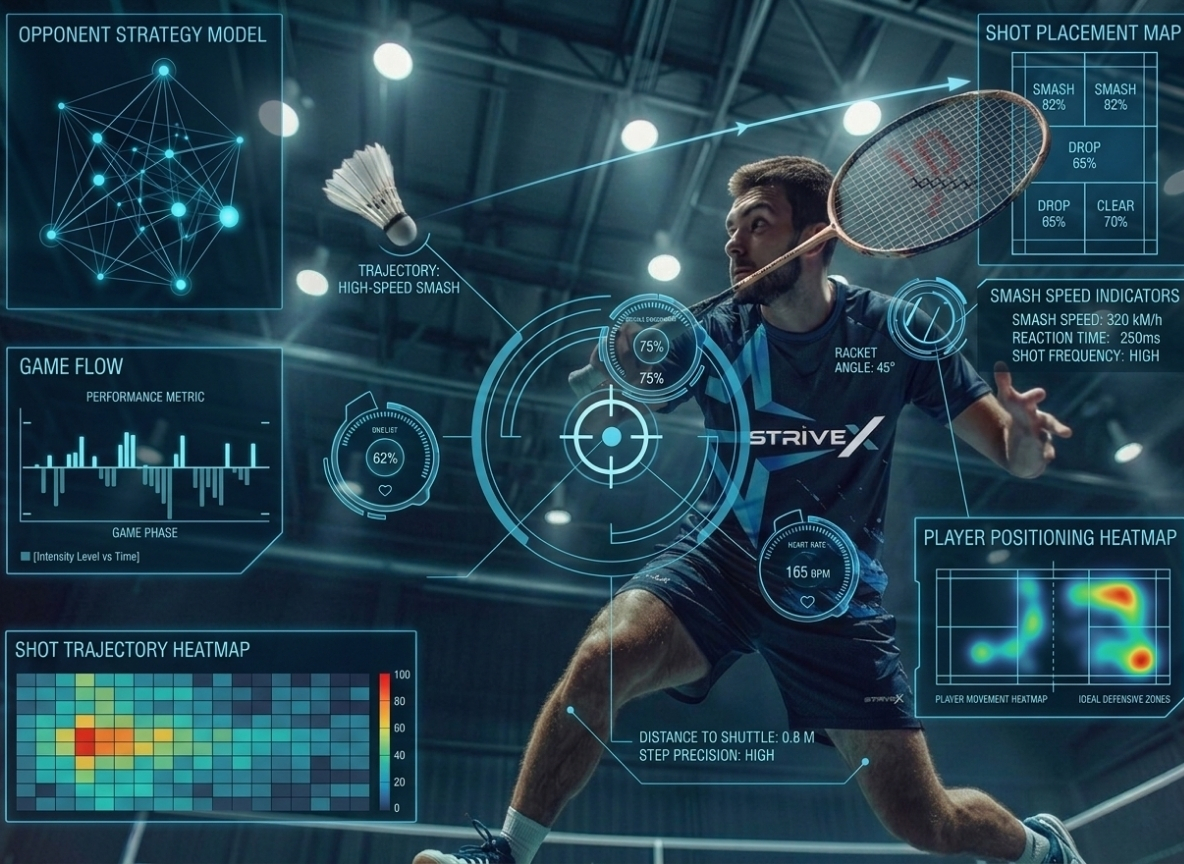
Technology is transforming badminton training, with wearable sensors bringing precision, data, and insights to every player’s game. From smart rackets that track swing speed to fitness bands monitoring endurance, modern tools allow players and coaches to analyse performance like never before. Technological innovations in badminton have improved the technique and speed of the game. It has helped with injury prevention and personalising training plans. In this blog, we explore how wearable sensors are changing the way badminton is played, trained, and mastered.
What Are Wearable Sensors in Badminton?
Wearable sensors are electronic devices that players can wear, such as wristbands, smartwatches, Inertial Measurement Units (IMUs), or sensor bands. These devices monitor movement, heart rate, stamina, strain, and other physical metrics during practice or matches.
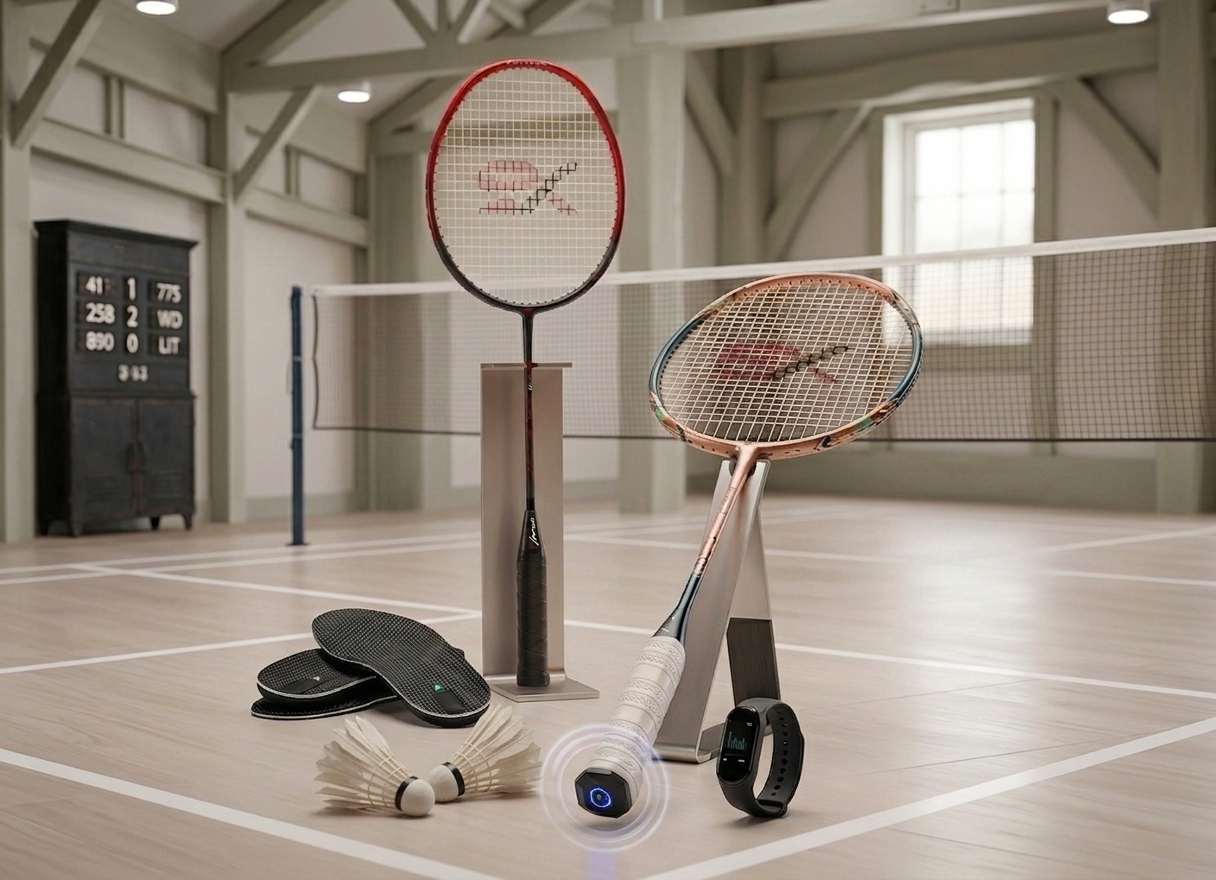
Types of Badminton Training Technology
Many modern badminton technologies include embedded sensors in rackets and court tracking systems. Such sports technology provides real-time data to track, analyse, and improve every aspect of a player's game.
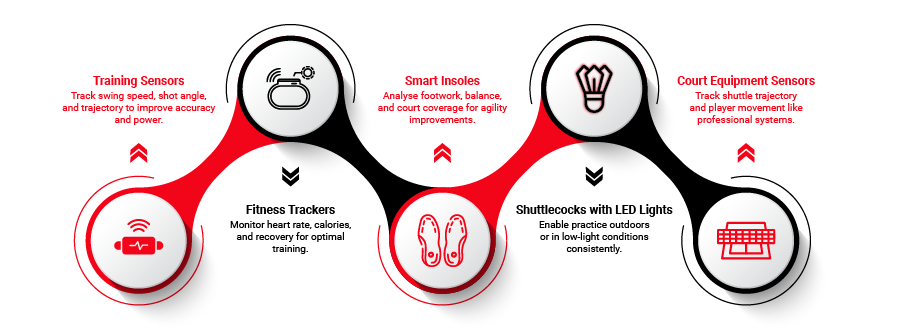
- Training Sensors: These sensors can be attached to rackets or worn on the wrist. They help track the speed, angle, and trajectory of each shot, enabling players to refine their technique, improve accuracy, and generate more power.
- Fitness Trackers: Wearables monitor physiological data such as heart rate, calorie burn, and recovery rate, allowing players to optimise training intensity and prevent overtraining. They also help in planning rest periods for better recovery.
- Smart Insoles: These track footwork, court coverage, and balance, providing insights into agility, speed, and positioning. They help players make small adjustments that can significantly improve performance and reduce injury risk.
- Shuttlecocks: Shuttlecocks equipped with LED lights for visibility in low-light or night conditions enable practice sessions outdoors or in dimly lit environments. This ensures players can train consistently without relying on perfect lighting.
- Court Equipment Sensors: These sensors are installed around the court to track shuttle trajectory, player movement, and match statistics. They offer advanced analytics similar to tennis' Hawk-Eye system and are useful for professional training, match reviews, and improving tactical awareness.
 Read more about Badminton Sports Gear Guide [2025] – Equipment & Buying Tip
How Wearables Improve Badminton Performance
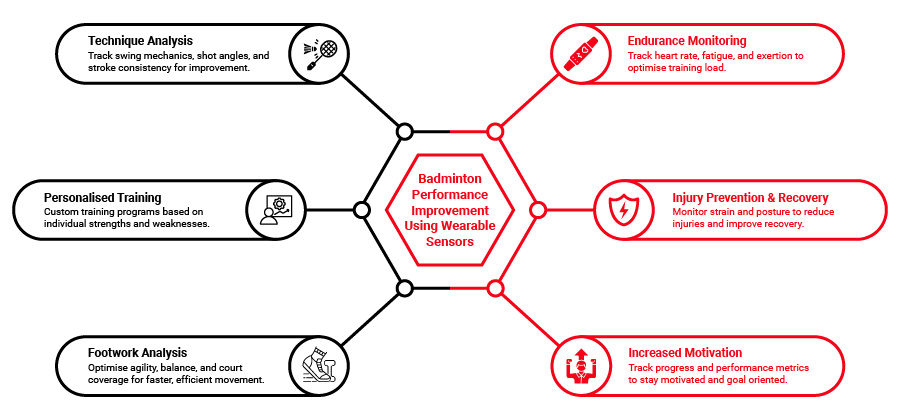
Wearable sensors have revolutionised badminton training by providing precise, real-time data that enhances technique, fitness, and strategy. These technologies allow players and coaches to make informed decisions, improve efficiency, and reduce the risk of injury.
Technique Analysis
Motion tracking sensors embedded in rackets or worn on the body capture detailed stroke mechanics, including forehand and backhand swings. They measure swing speed, smash angles, shot consistency, and trajectory. By analysing this data, players can identify technical weaknesses and fine-tune their strokes.
Coaches can use synchronised sensor data to provide multi-perspective feedback, giving players a comprehensive understanding of their technique. This makes training more efficient, accurate, and targeted, helping players improve faster than relying on observation alone.
Endurance Monitoring
Wearables track heart rate, exertion levels, calorie burn, and fatigue, providing insights into an athlete's stamina and physical performance. Advanced sensors, including triboelectric systems (TENGs), remain accurate even during bending, twisting, or high-intensity movements, ensuring reliable monitoring during fast-paced rallies.
By analysing this data, players can manage training load, avoid overtraining, and optimise recovery. This reduces the risk of injury while maintaining peak performance.
Personalised Training
The data collected from wearables allows coaches to create customised training programmes tailored to each player's strengths and weaknesses. For instance, if a player's backhand drive is weaker, the system highlights this and recommends targeted drills. Objective performance evaluation enables incremental improvements and accelerates skill development. Players receive actionable feedback, making every session more productive.
Injury Prevention and Recovery
Wearables can detect patterns of overuse and stress on muscles, joints, and ligaments. By monitoring posture, stroke mechanics, and movement patterns, players can adjust their technique to reduce strain, prevent injuries, and recover more efficiently.
Footwork Analysis
Smart insoles and motion trackers measure agility, court coverage, positioning, and reaction time. This allows players to refine footwork, maintain balance, and improve overall movement efficiency.
Increased Motivation
Tracking performance metrics over time provides players with tangible evidence of progress. Seeing improvements in swing speed, shot accuracy, or endurance motivates players to push harder, refine their skills, and compete at higher levels. Data-driven goals make training more engaging and performance-focused.
Learn more about How to Maximise Badminton Practice with Shuttlecock Feeders?
What Future Trends Can Be Seen in Smart Badminton Training?
As technology continues to advance, badminton training is set to become more intelligent, data-driven, and immersive. Emerging innovations are not only enhancing performance analysis but also transforming how players play, train, recover, and strategise.
Integration with Apps and Cloud Platforms: Future smart training systems will synchronise seamlessly with mobile apps and cloud platforms. Players and coaches can track progress over time, visualise trends, and access performance dashboards anywhere.
Immersive Training: Virtual reality (VR) and augmented reality (AR) will play a bigger role in badminton training. Players could simulate match scenarios or practice drills in immersive environments and receive instant feedback from virtual coaches.
Connected Equipment: The next generation of badminton courts will be equipped with sensors that track shuttle trajectory, player movement, and even court temperature. Connected equipment will provide real-time feedback during practice, allowing players to adjust shots, positioning, and strategy instantly.
Learn about The Evolution of Badminton Gear Over the Years
Advanced Injury Prevention Systems: Wearables will increasingly incorporate biomechanical analysis and stress monitoring to detect early signs of overuse or strain. Coupled with AI, these systems will predict potential injuries before they occur and recommend personalised recovery plans.
Data-Driven Competition Strategy: Future systems will enhance match preparation. AI-powered analytics can analyse opponents' play patterns, strengths, and weaknesses, helping players develop targeted strategies for upcoming matches. This will bring a new level of tactical intelligence to competitive badminton.
Start Precision Training Today
Elevate your game with high performance training machines engineered for accuracy, consistency, and measurable progress.
Discover StriveX Training MachinesFinal Thoughts
Wearable sensors are reshaping badminton training by turning performance into clear, actionable data. They help players improve technique, manage fitness, and train with greater focus. As technology advances, smart training will continue to make the game more precise and efficient.
Latest Post