The grip is the only point of contact between your hand and the racket. Every movement is transferred from the hand to the racket through the grip. If the grip is not suitable for you, control over your shots can be reduced.
Grips for badminton rackets come in different materials, textures, thickness and playing feedback. These differences change how the racket sits in your hand. This blog explains how common grip materials work and how they shape your play. A simple grip choice affects precision, comfort and consistency on court.
What are the Key Factors You Must Consider While Choosing a Grip for Your Racket?
The grip for a badminton racket must be chosen based on its practicality rather than aesthetics. Each of the following factors affects the control and comfort during play.
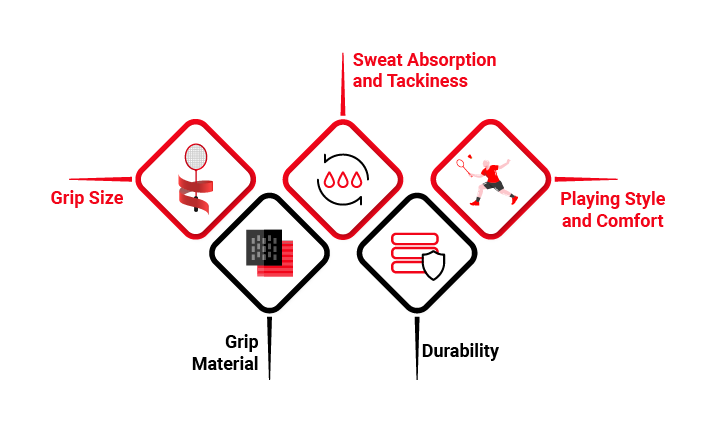
Grip Size
Grip size decides how securely the racket fits in your hand. A small grip size forces extra squeezing, while a large one limits wrist movement. Both reduce control and tire your hand faster.
With the right grip, players can hold the racket more securely. It can help them adjust angles quickly, especially during net shots and defence. Keeping the wrist relaxed improves reaction speed during fast exchanges.
Grip Material
Grip material affects softness, firmness, and surface texture. Soft materials provide impact cushioning, while firmer grips give a sharper feel on contact. This affects how clearly you sense each shot.
When the material suits your hand, the racket feels stable. You commit to shots without second-guessing. Poor material choice can cause slipping or discomfort, breaking focus mid-rally.
Sweat Absorption and Tackiness
Grips are essential for comfort during a match. During an intense play, players' hands get sweaty, reducing control over the shots. Absorbent grips keep your hand dry and prevent slipping. This matters more in long sessions and warm conditions.
Tacky grips stick lightly to your fingers. They improve hold without extra pressure. This helps maintain steady control during defence and enables quick counter-shots.
Durability
Some grips wear out quickly after just a couple of matches. They lose their texture, flatten, and start to tear or peel. A worn grip affects feel and stability, even if the size stays the same. Durable grips last longer and feel firmer during play. Softer grips feel more comfortable initially but require more frequent replacement, while firmer grips last longer with less cushioning. Your choice depends on how often you play and how you like your racket's grip feel.
Playing Style and Comfort
Aggressive players often prefer a firmer feel for clearer feedback, while control-focused players may benefit from softer, tackier grips that steady delicate shots.
Prioritising your comfort when choosing a grip helps keep grip pressure low. This keeps your hand relaxed and shots clean. Constant strain on the hand and the need to compensate for slipping forces affect accuracy and stamina.
Different Kinds of Badminton Grip Materials
Different materials offer unique combinations of tackiness, cushioning, sweat absorption and durability. The following are common grip types preferred by badminton players.
Replacement Grips
Replacement grips are thicker grips used to replace the original factory grip on a racket. They form the base layer and define the core feel of the handle.
These grips offer more cushioning and structure than overgrips. Players choose replacement grips when the original grip wears out or when they want to change the handle’s overall feel. They are less frequently replaced but play a key role in long-term comfort and shock absorption.
PU (Polyurethane) Grips
PU grips are the most common choice in badminton. They are made from a thin synthetic layer wrapped around a foam base. This structure provides a balanced mix of softness and surface grip, suitable for regular play.
PU grips have a slightly sticky feel, helping your fingers stay in place without additional pressure. The cushioning absorbs shock from clears and smashes, reducing strain on the hand. PU grips provide clear feedback, helping players stay aware of racket position during fast exchanges. This balance makes them reliable for players who train and play matches frequently.
Overgrips
Overgrips are thin, lightweight grips wrapped over an existing grip (factory grip or replacement grip). They are the most commonly replaced grip and the easiest way to customise how a racket feels. Overgrips allow players to adjust surface texture, grip thickness, and sweat control without permanently altering the handle. Because they are thin, they preserve wrist and finger mobility, which is essential for quick reactions, defence, and net play.
Right Overgrips for Better Control
Explore StriveX badminton Overgrips designed to improve comfort, grip stability, and shot control during every match and training session.
Shop NowTypes of Overgirps Based on Playing needs
Tacky Overgrips
Surface feel: Sticky / slightly adhesive
Thickness: Standard
Tacky overgrips feature a lightly adhesive surface that increases friction between the hand and the
handle. This allows players to maintain control with lower grip pressure, keeping the hand relaxed
during fast rallies.
Best for
- Control-oriented players
- Fast doubles play
- Indoor courts with dry conditions
- Players who dislike grip slippage
Silk Overgrips
Surface feel: Smooth, silky, soft
Thickness: Standard
Silk overgrips have a smooth surface designed for comfort and easy hand movement. They provide a soft
touch without aggressive tackiness, allowing quick grip changes and fluid wrist action.
Best for
- Players who prefer a smooth, non-sticky feel
- Players sensitive to rough textures
- Doubles players who rely on quick finger movement
- Short to medium playing sessions
Matte Overgrips
Surface feel: Dry, non-shiny, lightly textured
Thickness: Standard
Matte overgrips focus on dry grip stability rather than stickiness. The textured surface offers
consistent hold without feeling adhesive, making them comfortable over long sessions.
Best for
- Players who sweat moderately
- Players who dislike tacky grips
- All-round players seeking balance between comfort and control
Matte Thin Overgrips
Surface feel: Dry, lightly textured
Thickness: Thin / lightweight
Matte thin overgrips provide the same dry, non-slip feel as standard matte grips but with minimal
thickness. They preserve handle size and maximize wrist and finger responsiveness.
Best for
- Advanced and competitive players
- Front-court doubles specialists
- Players who rely on finger power and fast reactions
- Players who do not want to increase grip thickness
Keel (Ribbed) Overgrips
Surface feel: Textured with raised ridges
Thickness: Standard
Keel overgrips have a ribbed or waved structure that enhances friction and grip orientation. The raised
lines help players maintain consistent finger placement and improve grip security without excessive
squeezing.
Best for
- Players seeking extra grip stability
- Players who experience handle rotation
- Those who prefer a tactile, structured grip feel
Plain Overgrips
Surface feel: Neutral / smooth
Thickness: Standard
Plain overgrips offer a simple, no-frills grip surface without strong tackiness or heavy texture. They
provide a natural feel and are often chosen by players who prefer consistency without distraction.
Best for
- Traditional players
- Players experimenting with grip setups
- Training and casual play
- Players who prefer a neutral grip feel
Towel Overgrips
Surface feel: Soft, fabric-based
Thickness: Thick
Towel overgrips are made from cotton or terry fabric and are designed for maximum sweat absorption. They
keep hands dry in hot or humid conditions but significantly increase handle thickness.
Best for
- Players with very sweaty palms
- Outdoor or high-humidity play
- Long training sessions
- Players prioritising sweat control over slim handle feel
Final Thoughts
The right badminton grip directly affects how you control your racket, feel each shot, and maintain comfort during play. Small differences in material, thickness and tackiness can change precision, wrist movement, and confidence on court. PU grips offer balance and reliability; towel grips excel at sweat absorption; synthetic overgrips let you customise the feel; and rubber grips provide firm, durable feedback. Select a grip that keeps your shots steady and your hand relaxed.
Latest Post