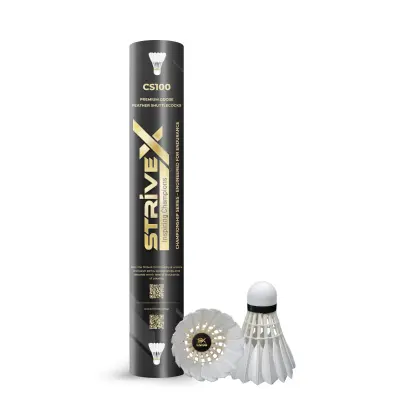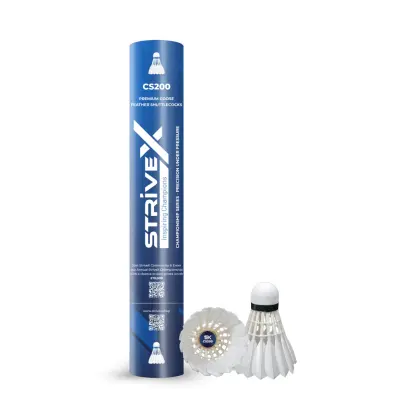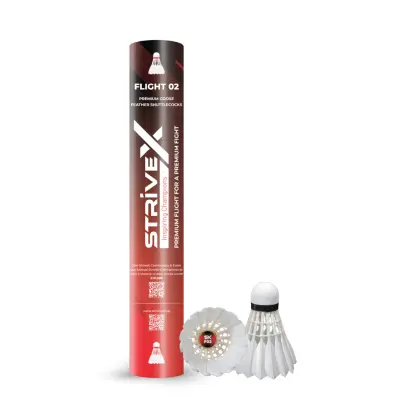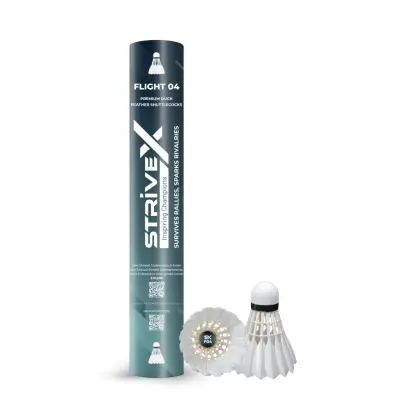
When choosing the right shuttlecock, the decision is not limited to feather and synthetic options. Shuttlecock speed is also an important factor in this decision. A high-quality shuttlecock can underperform in an unsuitable playing environment. Whether you are a badminton player at any level or a coach, it is essential to have a clear understanding of the shuttlecock speed.
What Do Shuttlecock Speed Ratings Mean?
Shuttlecock speed ratings indicate how fast a shuttlecock travels through the air under standard playing conditions. Manufacturers typically use speed ratings to classify shuttlecocks.
These ratings help players select a shuttlecock that performs consistently on their court. They tell how far the shuttlecock is expected to travel when struck correctly. The speed number reflects the shuttlecock’s intended flight characteristics rather than its overall quality.
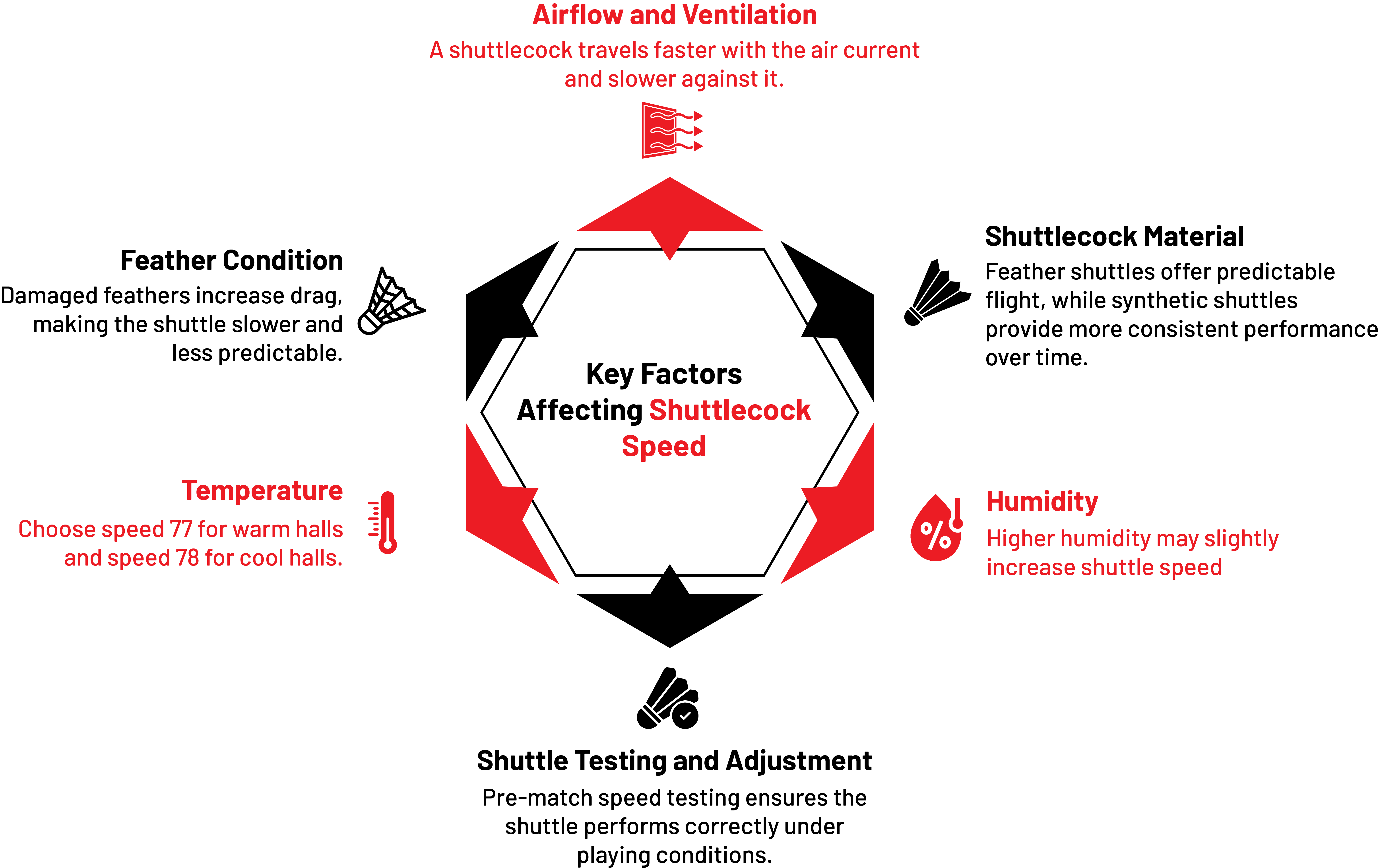
At StriveX, we stock speed 77 and speed 78 shuttlecocks, as these two ratings cover the conditions that UK players and clubs actually face. As a rule of thumb, speed 77 generally suits warmer playing conditions while speed 78 generally suits cooler playing conditions. The temperature inside the hall itself often matters more than the weather outside.
Factors That Affect Shuttlecock Speed
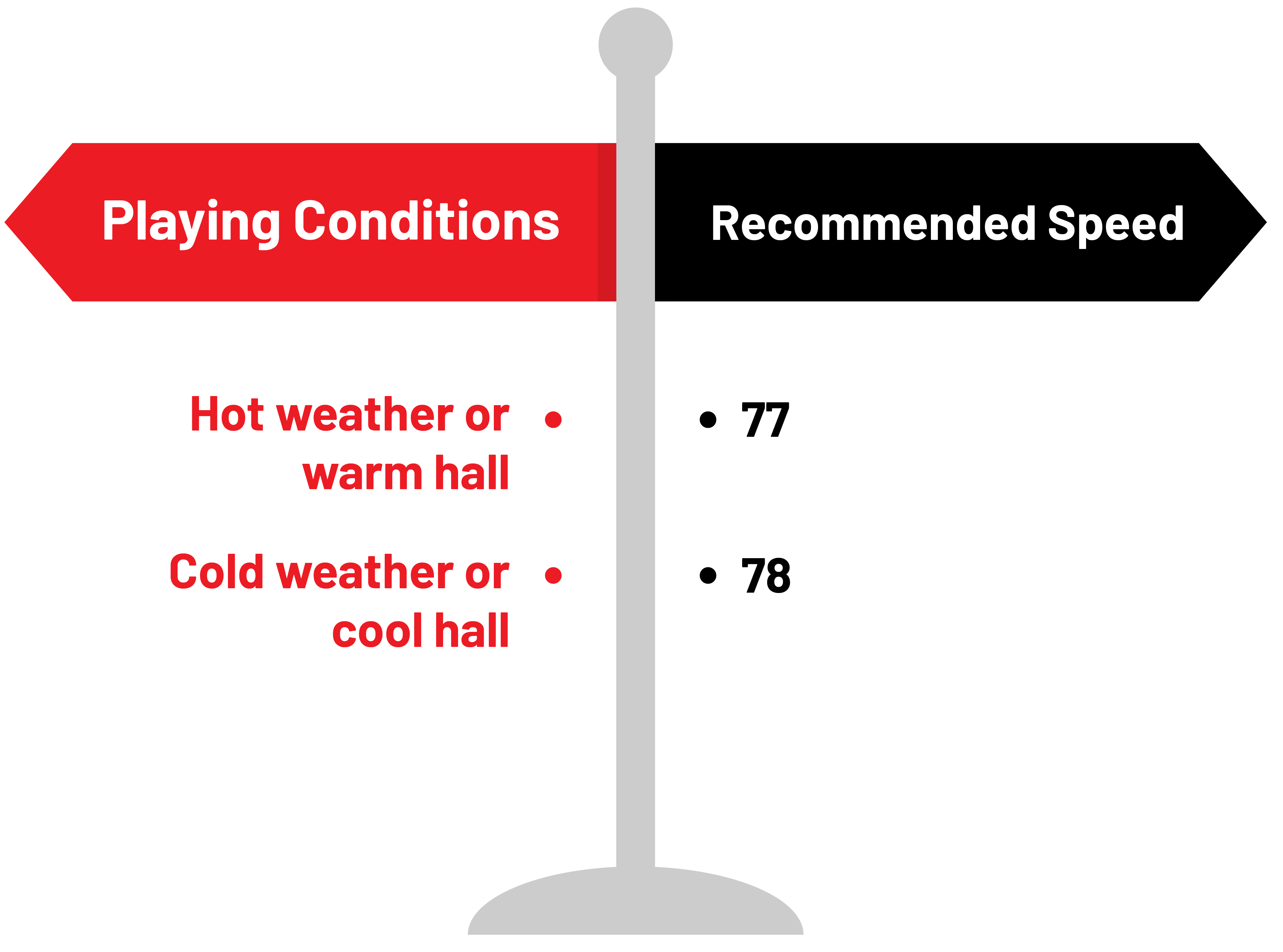
Environmental conditions such as temperature, humidity, and airflow can all affect the shuttlecock's flight characteristics. By understanding these factors, players can select the correct shuttlecock speed — speed 77 or speed 78 — for the conditions they are playing in. This helps maintain consistent gameplay regardless of court conditions.
Temperature
Temperature is one of the biggest factors affecting shuttlecock speed. Warm air is less dense than cold air, meaning there is less air resistance acting against the shuttlecock during flight. As a result, the shuttle travels further and feels faster in warm temperatures. In colder conditions, the air becomes denser, creating greater drag. This increased resistance slows the shuttlecock down more quickly and shortens its flight distance.
As a rule of thumb, use speed 77 in warmer playing conditions (or when the hall is warm) and speed 78 in cooler playing conditions (or when the hall is cold). The temperature and air flow inside the sports hall matter too — not just the weather outside.
Humidity
Humidity is the amount of water vapour present in the air. Water molecules make humid air slightly less dense because they are lighter than the main gases in the atmosphere, nitrogen and oxygen. As humidity increases, the shuttlecock may travel slightly faster due to reduced air density.
However, humidity also affects feather shuttlecocks by causing feathers to absorb moisture. This can alter the shuttlecock's weight, flexibility, and flight characteristics, which can reduce consistency during play.
Airflow and Ventilation
In indoor badminton halls, airflow can significantly affect shuttlecock speed. Air conditioning systems, fans, open doors, and ventilation units create air currents that influence the shuttle's speed and trajectory.
A shuttlecock travelling with an air current moves faster and farther than expected, while one travelling against the airflow slows down rapidly. This is the reason professional badminton venues carefully control airflow to ensure fair and consistent playing conditions.
Shuttlecock Material
The material used in the shuttlecock also affects its speed and flight behaviour. Feather shuttlecocks create a different aerodynamic profile compared to synthetic shuttlecocks. Feather shuttles naturally stabilise during flight and tend to slow down more predictably. Synthetic shuttlecocks generally experience less deformation during play and often maintain more consistent flight characteristics over time.
Feather Condition
The feathers of a shuttlecock gradually become damaged, bent, or broken. This changes the shuttlecock's aerodynamic properties and increases drag during flight. A worn shuttlecock usually travels more slowly and becomes less predictable than a new one. Clubs and tournaments regularly replace shuttlecocks to maintain consistent speed and performance throughout matches.
Shuttle Testing and Adjustment
Shuttlecocks are tested for speed before important matches. This is important because even when the correct speed rating is selected, manufacturers recognise that playing conditions vary. Players and officials perform a standard shuttle speed test to determine whether the shuttle travels the correct distance.
If a shuttlecock is flying too fast, the feather tips can be splayed slightly outward — this widens the skirt and adds drag, slowing the shuttle down. Avoid bending the tips inward, as this reduces drag and can make the shuttle fly faster.
Right Shuttlecock Speed for Different Players
The player's skill level influences the choice of shuttlecock speed. Beginners typically prioritise ease of use and consistency, while competitive players often focus on precision and compliance with tournament standards.
The following recommendations can help players choose the appropriate shuttlecock speed based on their playing level.
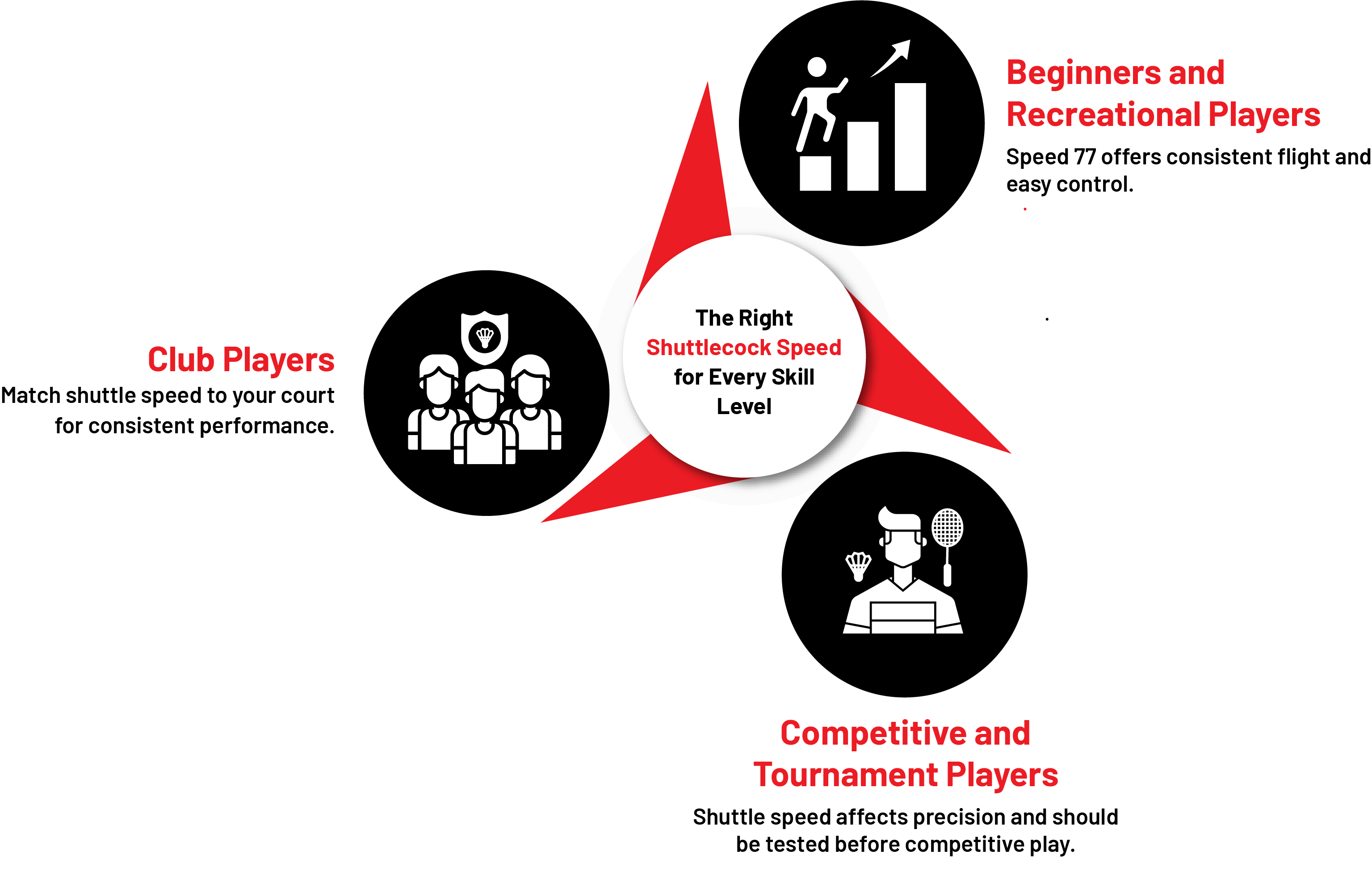
Beginners and Recreational Players
Beginners should focus on consistency and ease of play. A shuttlecock that matches the local playing conditions will help new players develop proper timing and shot techniques. For most recreational players, speed 77 is a good starting point because it performs well in typical indoor conditions.
Beginners should prioritise durable shuttlecocks that offer predictable flight and allow them to build confidence in their game. They generally do not need to experiment with multiple speeds.
Club Players
Regular club players need consistency as they are developing advanced techniques. It is important to choose a shuttlecock speed that suits the court conditions. Many clubs use speed 77 or 78 shuttlecocks, depending on the local temperature and hall conditions. Players should also consider durability, especially if they train frequently.
Competitive and Tournament Players
Competitive badminton demands greater precision, making shuttlecock speed selection far more important. Even small differences in shuttle speed can affect match strategy.
Tournament organisers test shuttlecock speed before play to ensure it meets competition standards. Players should be familiar with speed testing procedures and be prepared to adjust to different shuttlecock speeds.

Final Thoughts
Use of the right shuttlecock speed helps maintain consistent play and yields the best performance on the court. Factors such as temperature, humidity, airflow, and playing level can all influence how a shuttlecock behaves. By understanding speed 77 and speed 78, and selecting the right one for your conditions, you can improve shot accuracy, rally quality, and your overall playing experience.