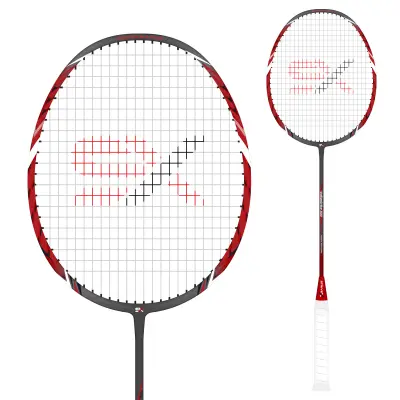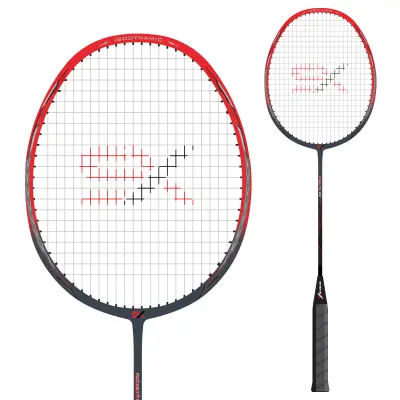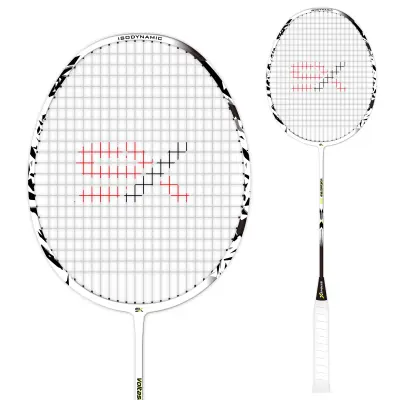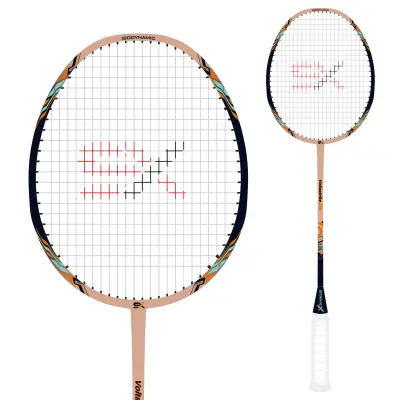
Choosing the right badminton racket depends on your skill level, playing style, and comfort. The best racket is not always the most expensive one. It is the one that feels natural in your hand and supports the way you play.
Many players focus only on brand names or appearance when buying a racket. However, factors such as racket weight, balance, grip size, shaft flexibility, and string tension have a much bigger impact on how the racket feels during a game.
This guide explains how to choose a badminton racket by focusing on the features that matter most. Whether you are buying your first racket, upgrading your equipment, or choosing a racket for competitive play, these points will help you make a better decision.
Quick Guide: Which Badminton Racket Should You Choose?
Before looking at technical details, start by understanding what type of player you are.
| Player Type | What to Look For |
|---|---|
| Beginner | Easy handling, comfortable weight, forgiving feel |
| Intermediate Player | Good balance between speed, control, and power |
| Advanced Player | It depends on the player’s level, playing style, and format. For example, singles players often prefer head-heavy rackets for greater power and control. |
| Fast Doubles Player | Head-light rackets for faster handling, quick reactions, and precise control in fast rallies. |
| Attacking Player | Head-heavy rackets for greater power, stability, and stronger attacking shots. |
Your final choice should also consider racket weight, balance point, grip size, shaft flexibility, and string tension.
Why Does Choosing the Right Badminton Racket Matter?
A badminton racket can influence how you move, react, and execute different shots. Choosing a racket that suits your playing level, style, and physical ability can make it easier to handle the racket and play consistently.
Racket characteristics such as weight, balance, and flexibility can affect how a racket feels and performs. A heavier or more head-heavy racket can provide greater stability and potential power, but may require more effort to manoeuvre. A lighter or more head-light racket can feel quicker and easier to handle, particularly during fast exchanges, although it may provide a different feel and level of stability.
Before buying, consider your playing habits:
- Do you rely on powerful smashes and attacking shots?
- Do you play fast rallies with frequent drives and quick exchanges?
- Are you still developing your basic techniques?
- Do you prioritise speed and manoeuvrability, or power and stability?
- What racket weight and balance feel comfortable for you?
There is no single racket specification that is best for every player. Understanding your own game and choosing a racket that matches your ability, preferences, and style is the first step towards finding the right racket.
How to Choose the Right Badminton Racket Weight
Racket weight is one of the first things players should consider. The weight of a racket affects how it feels during swings, rallies, and attacking shots. A heavier racket usually feels more stable, while a lighter racket is easier to move quickly. Badminton rackets commonly use a “U” rating system. A smaller number means a heavier racket.
| Weight Category | Approximate Weight | General Feel |
|---|---|---|
| 3U | 85–89g | More stability and power |
| 4U | 80–84g | Balance of speed and power |
| 5U | 75–79g | Faster handling and easier manoeuvrability |
| 6U | 70–75g | Very lightweight feel |
When deciding how to choose badminton racket weight, consider your experience and playing style.
Beginners
Beginners often benefit from a racket that is comfortable and easy to manoeuvre. Lighter rackets, such as 4U or 5U models, can be easier to handle and may help new players develop their technique without excessive fatigue. However, the ideal weight depends on the player's strength and comfort.
Intermediate Players
Intermediate players can generally choose from a wider range of racket weights based on their playing style and physical ability. A 3U or 4U racket can provide a balance of stability, power, and manoeuvrability, while lighter 4U or 5U rackets may suit players who prioritise speed and quick handling.
Advanced Players
Advanced players typically choose racket weight based on their technique, playing style, and physical preferences rather than solely on their skill level. Heavier rackets can offer greater stability and support powerful attacking play, while lighter rackets can provide quicker handling and faster racket movement.
How Does Racket Balance Affect Your Choice?
Racket balance describes how the weight is distributed along the racket. Two rackets with the same overall weight can feel very different because their weight is distributed differently.
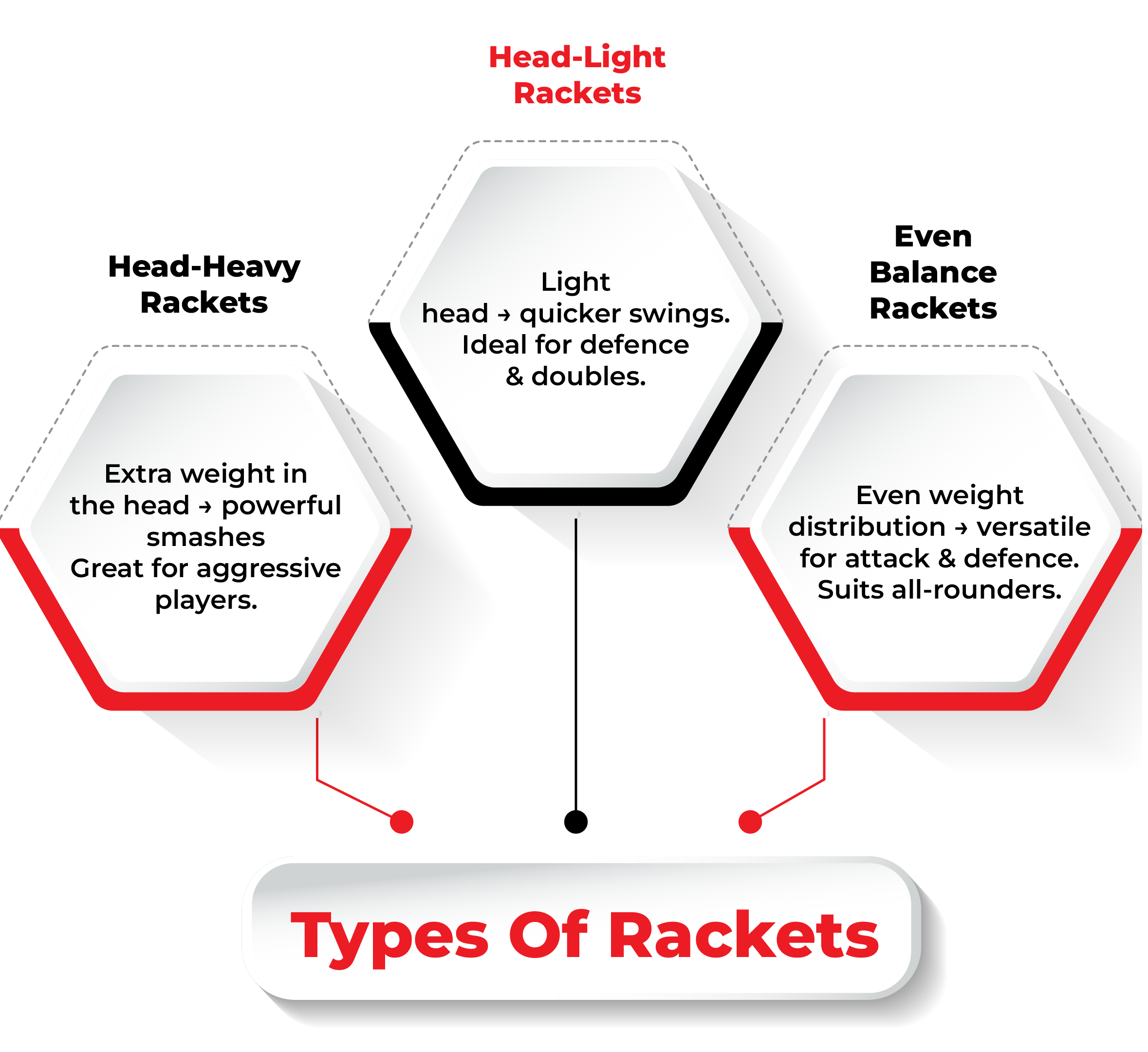
The three main balance types are:
- Head-heavy
- Head-light
- Even balance
The right balance depends on your playing style, technique, and personal preference.
Head-Heavy Badminton Rackets
A head-heavy racket has more weight distributed towards the racket head. This increases the racket's momentum during the swing and can help generate power, making head-heavy rackets popular among attacking players.
Head-heavy rackets are often preferred by players who:
- Rely on powerful smashes and attacking shots
- Play frequently from the rear court
- Prefer greater stability and momentum through their shots
The trade-off is that they can feel slower during fast rallies and quick defensive exchanges.
Head-Light Badminton Rackets
A head-light racket has more of its weight distributed towards the handle. This generally makes the racket feel quicker and easier to manoeuvre, which can benefit players who prioritise speed, fast reactions, and rapid racket movement.
They are commonly preferred by players who:
- Play fast-paced rallies and quick exchanges
- Prioritise manoeuvrability and rapid reactions
- Enjoy quick drives, defence, and net play
The trade-off is that they provide less head-weight momentum than a comparable head-heavy racket, so generating power may rely more heavily on the player's technique and swing speed.
Even Balance Badminton Rackets
An even-balance racket sits between head-heavy and head-light designs, offering a more neutral distribution of weight. These rackets provide a combination of:
- Speed
- Stability
- Control
- Power
Even-balance rackets can be a practical option for all-round players and those who want versatility rather than strongly favouring either power or speed.
How to Choose Badminton Racket Grip Size
Grip size affects comfort, control, and how naturally you can move the racket. Many players focus on weight and balance but ignore grip size. However, the grip is the only point where your hand connects with the racket, so choosing the right size matters.
A grip that is too large can reduce wrist movement. A grip that is too small may make you hold the racket too tightly. When learning how to choose badminton racket grip size, focus on comfort and control. Most badminton rackets use grip sizes from G1 to G5:
| Grip Size | Feel |
|---|---|
| G1 | Thickest grip |
| G2 | Larger grip |
| G3 | Medium grip |
| G4 | Common choice for many players |
| G5 | Thinnest grip |
In the UK, many badminton rackets commonly come with G4 and G5 grip sizes. Players can also adjust the feel of the handle by using different grip materials:
| Grip Type | Characteristics |
|---|---|
| Synthetic PU Grip | Comfortable, durable, and provides cushioning |
| Towel Grip | Absorbs sweat and gives a softer feel |
| Overgrip | Adds tackiness and increases grip thickness |
A smaller grip can help players who like more wrist movement, while a larger grip can provide a firmer hold.
How Does Shaft Flexibility Affect Your Badminton Racket Choice?
Shaft flexibility affects how a racket bends and recovers during a swing. When you hit the shuttle, the shaft flexes and then returns towards its original position, influencing the racket's feel, timing, and power transfer.
The right shaft depends on your technique, swing speed, and experience level. A beginner and an advanced player usually need different shaft characteristics.
Flexible Shaft
A flexible shaft bends more easily during a swing and can help players who have slower or less developed swings generate racket-head speed. It is often suitable for:
- Beginners and developing players
- Players with slower swing speeds
- Players who prefer a softer and more forgiving feel
A flexible shaft can make it easier to generate power with a less demanding swing. However, it can feel less direct during very fast swings, where a quicker response may be preferred.
Medium-Flex Shaft
A medium-flex shaft offers a middle ground between flexibility and stiffness. It provides a combination of power assistance, responsiveness, and control, making it a versatile option for many recreational and intermediate players.
It can also be a practical choice for players who are still developing their technique and want a racket that performs comfortably across different types of shots.
Stiff Shaft
A stiff shaft bends less and generally provides a more direct and responsive feel. It can suit players with faster swing speeds, consistent timing, and well-developed technique.
A stiff shaft can provide more precise feedback and efficient power transfer when the player can load and control it effectively. However, it can be less forgiving for players who do not generate enough swing speed or have inconsistent timing.
Remember: Stiffer does not automatically mean better. The best shaft flexibility is the one that matches your swing and allows you to generate power, control, and consistent timing comfortably.
How Does String Tension Affect Your Badminton Racket Choice?
String tension has a significant effect on how a badminton racket feels and responds when you hit the shuttle. The same racket can feel very different depending on its string type and tension.
Lower tension usually provides:
- A larger sweet spot
- More forgiveness
- Easier power generation
Higher tension usually provides:
- More control
- A sharper feel
- Better response for skilled players
For beginners, lower tension is often easier because it helps generate power without requiring perfect technique. Advanced players may prefer higher tension because they can use the extra control effectively. When choosing a racket, choose a string setup that matches your current ability rather than the highest tension available.
How Does Frame Material Affect Your Badminton Racket Choice?
Frame material affects a racket's weight, stiffness, durability, and price. Most players will come across three main options:
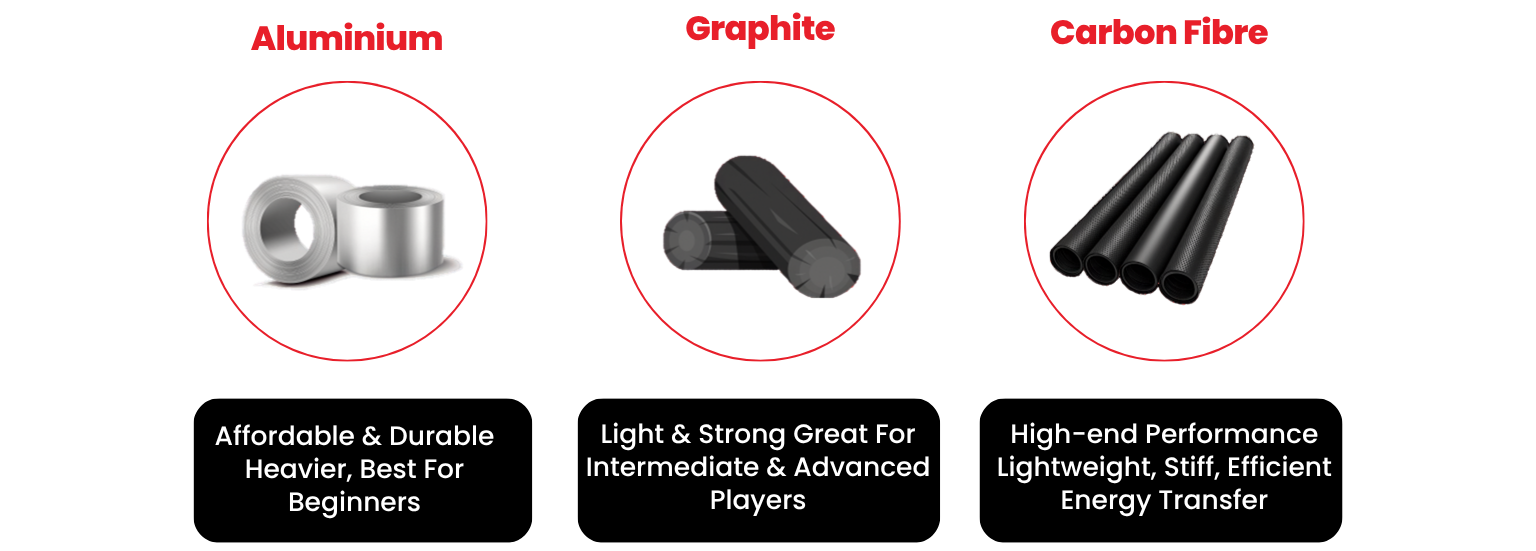
Aluminium: Affordable and durable, but usually heavier and less responsive. Often found in entry-level rackets.
Graphite: Lighter and stronger than aluminium, with a more responsive feel. A common choice for recreational and intermediate players.
Carbon fibre and high-modulus carbon: Very lightweight and stiff, with efficient energy transfer. Typically used in higher-end rackets for players who want precision and speed.
Higher-grade material doesn't automatically mean a better racket for you. Choose a frame that suits your skill level, budget, and playing style.
How to Choose a Badminton Racket Based on Your Playing Level
The right badminton racket depends on your playing level, technique, and preferred style. Beginners often benefit from comfort and easy handling, while intermediate and advanced players can choose more specifically according to their preferred balance of speed, power, control, and stability.
Best Badminton Rackets for Beginners
Beginners should focus on developing their technique and building confidence. A suitable beginner racket should feel comfortable, easy to handle, and not overly demanding.
Look for:
- Comfortable weight
- Easy handling
- A forgiving feel
- A shaft that supports power generation
The goal is to choose a racket that helps you develop your game without making the equipment itself difficult to handle.
VoltaStrike 300
The VoltaStrike 300 is designed for beginners to lower intermediate players who want a stable and comfortable racket with extra attacking support.
Key specifications:
- 4U — 82g
- Slightly head-heavy balance (305mm)
- Medium-stiff shaft (50%)
- 84g swing weight
- G5 grip
Its slightly head-heavy balance provides additional momentum for attacking shots, while the flexible shaft can help players generate racket-head speed more easily.
VoltaStrike 400
The VoltaStrike 400 is designed for players who want a lightweight racket with a strong attacking feel.
Key specifications:
- 6U — 75g
- Very head-heavy balance (325mm)
- Medium-stiff shaft (70%)
- 83g swing weight
- G5 grip
Unlike many lightweight rackets that focus mainly on speed, the VoltaStrike 400 combines a very light frame with a head-heavy balance. This makes it suitable for players who want easier movement while still looking for stronger attacking support.
Best Badminton Rackets for Intermediate Players
Intermediate players generally have a better understanding of their strengths and playing style. At this stage, racket choice can be based more specifically on whether the player prioritises speed, control, versatility, or attacking power.
VoltaStrike 350
The VoltaStrike 350 is an all-round racket designed for players who want versatility.
Key specifications:
- 4U — 83g
- Even balance
- Medium-stiff shaft
- 84g swing weight
- G5 grip
Its even balance makes it suitable for players who want a mix of attacking and defensive ability. It is a good option for players who want one racket that performs well across different situations.
VoltaStrike 250
The VoltaStrike 250 is designed for players who prefer quicker handling and control.
Key specifications:
- 4U weight
- Slightly head-light balance
- Medium-stiff shaft
- Full Woven Carbon construction
Its head-light design makes it easier to move during fast rallies, making it suitable for players who value speed and precision.
VoltaStrike 450
The VoltaStrike 450 is designed for players who want more attacking support while maintaining control.
Key specifications:
- 4U weight
- Slightly head-heavy balance
- Medium-stiff shaft
- High Modulus Graphite construction
It provides a stronger attacking feel compared with balanced rackets while remaining suitable for improving players.
Best Badminton Rackets for Advanced Players
Advanced players usually have a clear understanding of their preferred style.
They often choose rackets based on:
- Speed
- Precision
- Control
- Power
At this level, there is no single “best” racket. The right choice depends on how the player approaches the game.
VoltaStrike 200
The VoltaStrike 200 is designed for players who value speed and control.
Key specifications:
- 4U weight
- Fairly head-light balance
- Stiff shaft
- Full Woven Carbon construction
Its head-light balance helps with faster racket movement, making it suitable for players who prefer quick reactions and controlled attacking play.
Xtronic Z7
The Xtronic Z7 is designed for advanced players who want a more specialised racket setup. It is built with 40T Ultra High Modulus Carbon, the highest-grade frame material in the StriveX range.
This material provides a more responsive feel, improved stability, and efficient energy transfer compared with standard graphite rackets. This makes it suitable for players who demand precision, consistency, and performance at a competitive level.
It is available in different weight options to suit different preferences.
Xtronic Z7 3U
The 3U version provides a heavier feel and more stability. It is suitable for players who:
- Prefer stronger shot stability
- Play more attacking styles
- Are comfortable handling a heavier racket
Xtronic Z7 4U
The 4U version provides faster handling while maintaining an attacking feel. It is suitable for:
- Fast doubles players
- Players who want quicker reactions
- All-round attacking styles
Common Mistakes When Choosing a Badminton Racket
Choosing a badminton racket becomes much easier when you know what to look for. However, many players make simple mistakes that can affect their comfort, control, and overall playing experience.
A racket should match your own game, not just follow trends or recommendations from others. Before making a purchase, avoid these common mistakes.
Choosing a Racket Because a Professional Uses It
Professional players choose rackets based on their strength, technique, playing style, and years of experience. A racket used by a professional player may have specifications that suit their game but feel completely different for a beginner or casual player.
For example, an advanced player may prefer a stiffer shaft or heavier racket because they have the technique and power to control it. A beginner using the same racket may find it harder to generate power or play comfortably. Instead of copying a professional setup, focus on finding a racket that matches your own skill level and playing style.
Choosing the Heaviest Racket for More Power
Many players believe a heavier racket automatically creates more power. While a heavier racket can provide more stability and momentum, it is not always the best choice.
A racket that is too heavy can slow down your movement, make quick reactions harder, and cause fatigue during longer games. Power comes from the combination of your technique, timing, strength, and the racket characteristics. The right weight should allow you to play comfortably while still supporting your style.
Ignoring Grip Size
Grip size is often overlooked because players usually focus on weight, balance, and appearance first. However, the grip is the main connection between you and the racket. A grip that is too large can limit wrist movement, while a grip that is too small may make you hold the racket too tightly.
The correct grip size helps you change between forehand and backhand shots more naturally and gives you better control during rallies.
Choosing High String Tension Too Early
Higher string tension is often associated with better control, but it is not suitable for every player.
A tighter string bed requires better technique, timing, and consistency. Beginners may find it harder to generate power because the racket provides less forgiveness.
Players who are still developing their strokes usually benefit from a more forgiving string setup. As your skills improve, you can adjust tension based on your playing style and preferences.
Frequently Asked Questions
What badminton racket should a beginner buy?
A beginner should choose a racket that is comfortable, easy to control, and not too demanding. A lightweight or medium-weight racket with a forgiving feel is often a good starting point.
How do I choose the right badminton racket for me?
Start by understanding your playing style and experience level. Then compare racket weight, balance, grip size, shaft flexibility, and string tension.
Is a heavier badminton racket better?
Not always. A heavier racket can provide more stability, but a lighter racket is easier to move quickly. The best choice depends on your strength and playing style.
What is the difference between 3U and 4U badminton rackets?
3U rackets are generally heavier than 4U rackets, which changes stability and handling. For a full comparison, see our 3U vs 4U vs 5U badminton racket guide.
Which badminton racket is best for doubles?
Many doubles players prefer lighter and faster rackets because quick reactions are important during fast exchanges. However, attacking doubles players may prefer slightly head-heavy options for additional power.
How do I choose badminton racket grip size?
Choose a grip size that feels comfortable and allows natural wrist movement. Many players use G4 or G5 sizes and adjust the feel using additional grips.
Should beginners use high string tension?
Usually not. Beginners often benefit from lower tension because it provides a larger sweet spot and makes power generation easier.

Final Thoughts: Choosing the Right Badminton Racket
Learning how to choose a badminton racket becomes easier when you understand what affects the way a racket feels and performs. No single racket works for every player. The best choice depends on your skill level, playing style, comfort, and personal preference.
Before buying, consider:
- Racket weight
- Balance point
- Grip size
- Shaft flexibility
- String tension
Once you understand these factors, choosing the right badminton racket becomes much simpler. Explore StriveX badminton rackets and find a model that matches your style of play.