The difference between a lightweight badminton racket and a heavyweight badminton racket can be felt by just holding the racket. This weight has an impact on your game, both positive and negative. It decides your recovery time from a shot as well as strain build-up in your arm.
In this blog, you will learn about the effects of heavy and lightweight rackets and how they behave differently. You will get practical insights into what actually happens on the court.
What Does Racket Weight Actually Mean?
Racket weight is measured when it is unstrung and still has the factory-made grip attached. You can also weigh the racket with strings and overgrips, but it will add a few grams, and you will not be sure how much the actual frame weighs.
Racket weight is classified using the “U” system to standardise the weight system all over the world.
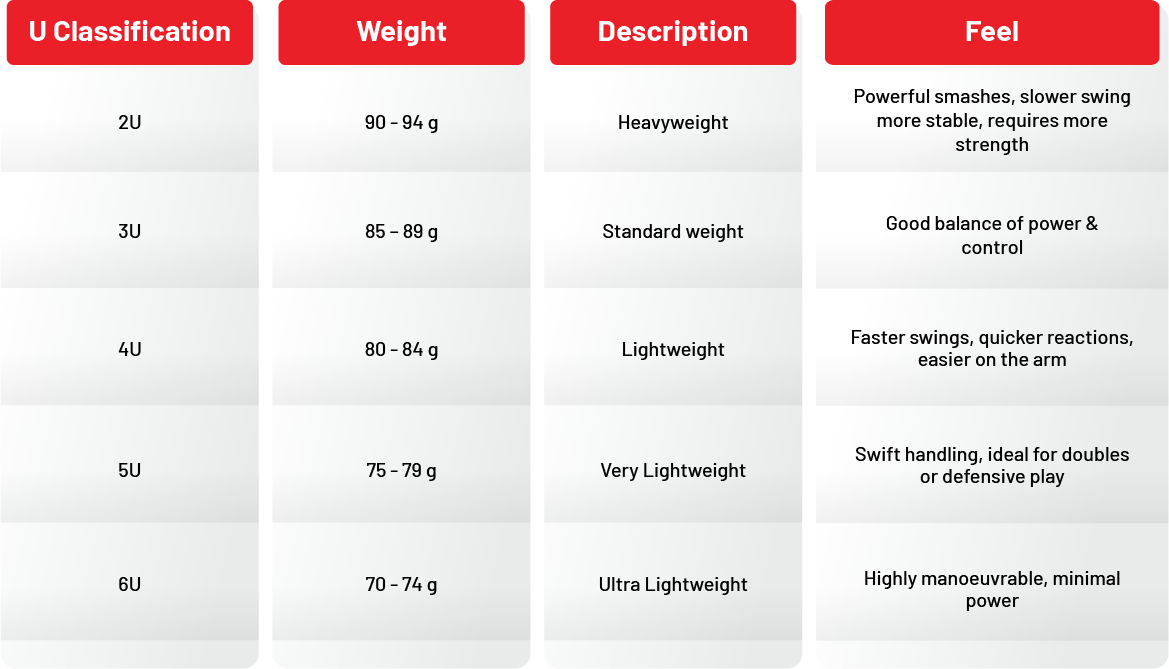
Weight also interacts with the balance point of the racket. A racket can feel heavier at the head, lighter at the handle, or evenly balanced. Head-heavy rackets add momentum to smashes and clears, giving power but slightly slowing swings. Head-light rackets feel fast and responsive, which helps with quick reactions and net play. Even-balance rackets aim to combine these traits, offering a middle ground between speed and power.
Understanding both total weight and balance is key. Two rackets can weigh the same but feel completely different depending on how that weight is distributed. This distinction shapes your swings, your endurance, and how comfortable the racket feels during extended play.
How Does Racket Weight Influence Your Badminton Performance?
Racket weight plays a central role in how you swing, hit, and move on the court. Even a small difference in grams can change the feel of your shots and your overall endurance.
Reaction Time
A lighter racket allows faster swings, which helps when you need quick reflexes at the net. Drives, fast exchanges, and defensive lifts become easier. This will let your wrist and arm respond without strain. Conversely, a heavier racket slows your swing slightly, which can affect reaction speed. A heavier racket provides stability during powerful shots.
Power Effectiveness
Heavier rackets transfer more momentum to the shuttle, resulting in stronger smashes and clears. The weight of the racket contributes to shot power. Lightweight rackets are easier to swing but require more effort from your arm to achieve the same power. This means that lightweight rackets are better suited for control and placement rather than pure smashing.
Control and Precision
Lighter rackets improve manoeuvrability, making delicate net shots, drops, and blocks more precise. They allow subtle adjustments mid-swing, which can be critical during fast rallies. Heavier rackets feel more rigid, making precise flicks or soft net play slightly harder unless you have strong technique.
Endurance and Fatigue
Using a heavy racket for extended matches can tire your arm, wrist, or shoulder more quickly. Lighter rackets reduce fatigue, allowing longer sessions without compromising performance. The choice of weight can determine how consistently you perform across multiple games or extended training sessions.
Influence on Playing Style
Your racket weight can reinforce your natural style. Aggressive players often benefit from slightly heavier or head-heavy rackets for smashing power. Defensive or doubles players favour lighter rackets for speed, agility, and rapid exchanges. Matching your weight to your style ensures that your shots are effective and your movements stay fluid.
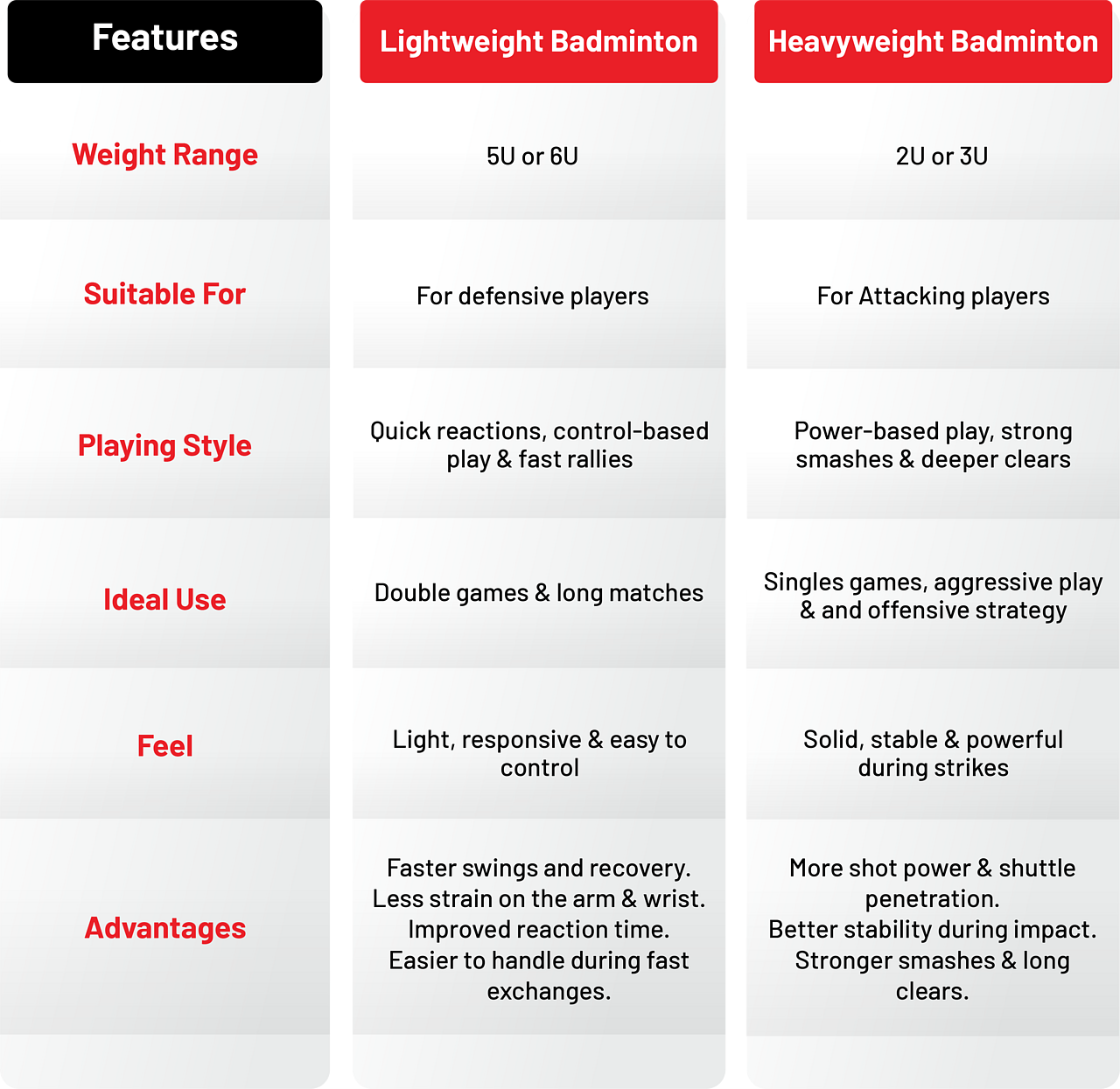
Key Features of Heavy and Lightweight Badminton Rackets

How Does Skill Level Influence the Right Racket Weight Choice?
A player’s skill level strongly influences which racket weight feels natural and comfortable. The choice of racket weight changes with the progress you make in your game.
Beginners: Learning Techniques
Beginners benefit from lighter rackets because they are easier to swing and control. A light frame helps new players focus on basic strokes without feeling overwhelmed. It also reduces strain on the wrist and shoulder, which is important during the learning phase. Heavy rackets make it harder to develop a clean technique due to the fatigue they cause.
Intermediate Players: Balancing Control and Strength
Intermediate players often start experimenting with a bit more weight. At this stage, players are working on their timing and consistency of shots, so a slightly heavier or intermediate-weight racket can support stronger shots without sacrificing too much control. Many players in this range settle on 4U or 5U rackets because they offer a mix of speed and stability.
Advanced Players: Balancing Weight to Playing Style
Advanced players possess the technique and strength to handle heavier frames with ease. This is the reason most advanced players choose heavier frames for added power, but there are professionals who prefer lighter rackets depending on their style and manoeuvrability. A 3U or even 2U racket works well for players who hit powerful smashes or prefer aggressive singles play. They are able to manage the added strain and use the extra mass to gain depth and force in their shots.
Some advanced doubles players choose lighter rackets for speed, depending on their individual playing style.
Final Thoughts
Racket weight shapes the techniques of the game play. It affects the reaction time, rally length and your limb’s comfort and confidence in each stroke. There is not a single weight that suits every player’s playing style. Your style, your skill level, and the way your body responds to the racket matter far more than the number printed on the frame.
If you work with strong, attacking shots, a heavier option adds the momentum your smashes rely on. If you prefer speed, clean control, and long rallies, a lighter frame keeps your movement sharp and your arm fresh. Most players use a weight that feels natural over time and feel comfortable hitting shots freely.
Latest Post