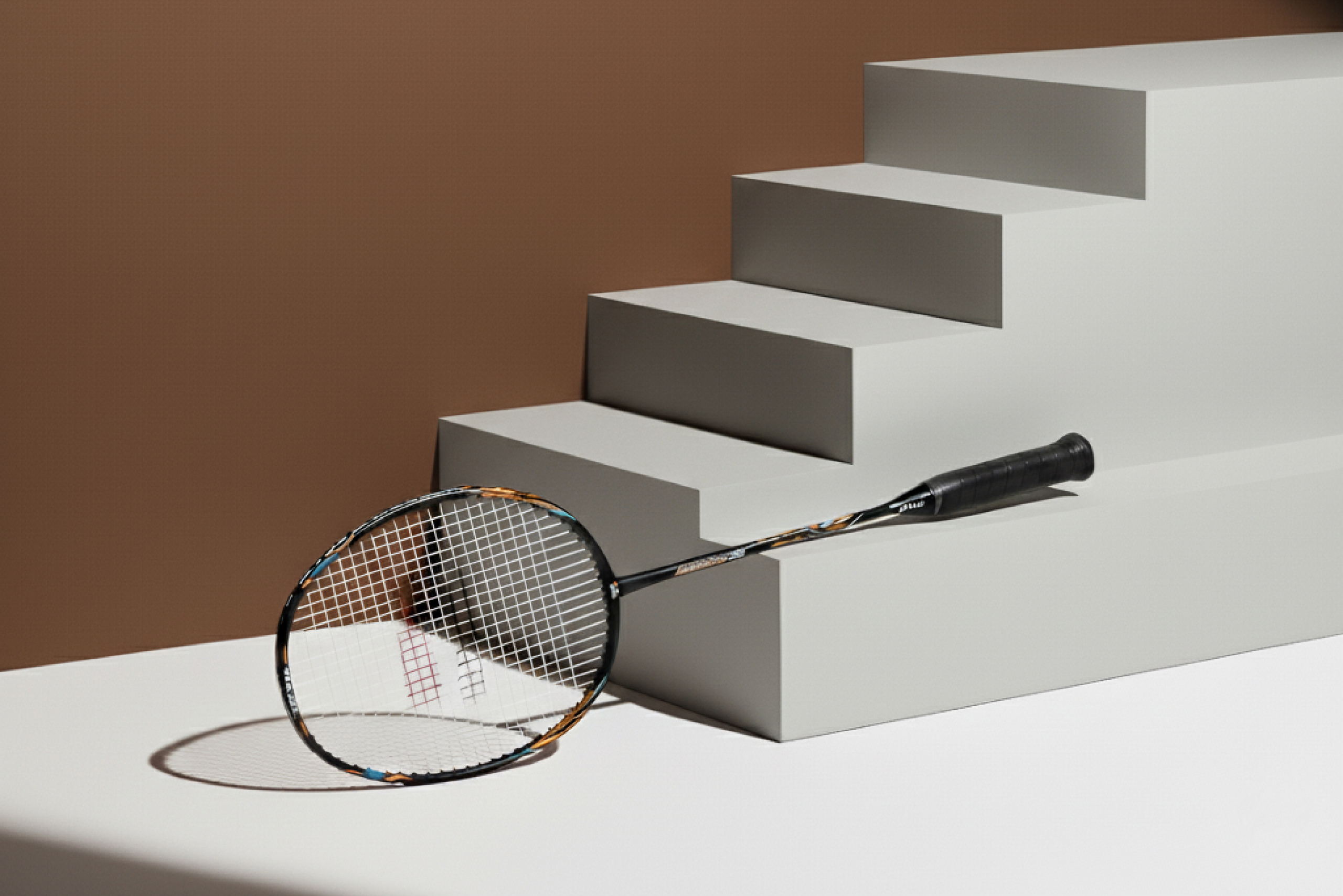

Racket string tension directly impacts your badminton performance by affecting power, control, and shuttle response. String tension in a racket refers to how tight the string bed is. It is the pulling force applied to the strings during their installation. It is measured in pounds (lbs) or kilograms (kg).
Even a slight change in string tension can significantly affect a player’s performance and comfort. This blog explains how string tension affects gameplay, helping you choose the ideal setup for your playing style and skill level.
What is the Science Behind String Tension and Shuttle Response?
The science behind string tension and shuttlecock response lies in the elasticity of the string bed. The String bed stretches when a shuttle strikes the racket and then rebounds to propel the shuttle forward. The amount of stretching determines the quantity and efficiency of energy transfer to the shuttle for power and control.
Low Tension (Loose Strings)
Rackets that have low string tensions have more elasticity, similar to a trampoline. This effect enables the shuttle to travel faster with minimal force, increasing the repulsion on the shuttle. In this tension, the shot accuracy suffers from limited precision control. With loose strings, rackets have a wider sweet spot, allowing for consistent shots but less precise control over the ball’s direction and placement.
High Tension (Tight Strings)
High-tension rackets have a firm string bed that provides a non-springing effect. It means it has less power and is preferred by advanced players. Rackets with tight strings require powerful shots and strong hitting techniques at the right moment. This tension bed is less forgiving with a small sweet spot.
How String Tension Affects Different Aspects of Performance?
The string tension of a badminton racket affects various aspects of performance. Finding a balance between all these factors depends on how tight or loose the strings are.
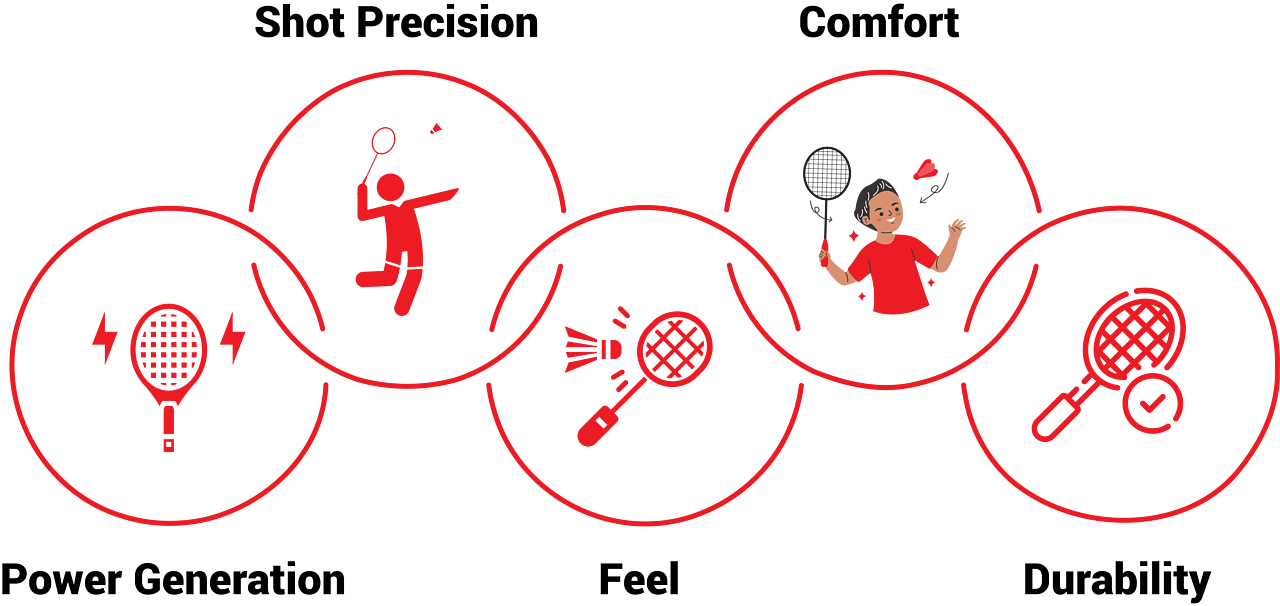
Power Generation: Lower string tension increases the trampoline effect, creating more shuttle bounce and effortless power. In contrast, higher tension reduces repulsion, requiring more substantial swings and precise technique but improving shot accuracy.
Shot Precision: Tighter strings provide cleaner contact and improved shuttle placement, enabling skilled players to execute accurate shots. Loose strings, however, can cause shuttle drift and make direction control less predictable.
Feel: High tension provides a crisp, responsive feel that enables advanced players to sense the shuttle’s impact more clearly. Lower tension provides a softer, more forgiving touch that benefits beginners still developing control.
Comfort: Lower tension helps absorb impact vibrations, reducing strain on the wrist and elbow. It also offers a more cushioned feel, making play more comfortable during longer sessions.
Durability: Rackets strung at high tension experience increased stress on the strings. It shortens the lifespan of strings, and they wear down easily. This makes the strings prone to early breakage.
Why Should You Restring Your Racket After Purchasing It?
You should restring your racket after purchasing it because factory strings are set at a generic tension. Restringing ensures optimal power, control, and consistency according to your preferred performance and comfort.
Pre-installed strings are strung at a generic tension, usually on the lower side to ensure durability. This default setup rarely aligns with an individual player’s style or preferences. It also tends to lose tension quickly, resulting in reduced performance over time. Restringing ensures consistent shuttle response and better shot accuracy.
Know more about Badminton Sports Gear Guide [2025]
Ideal String Tension for Different Skill Levels
The ideal string tension varies with experience, playing style, and physical strength. Choosing the right range ensures a balance between power, control, and comfort suited to each level of play.
Beginners
Initial-level players who are getting comfortable with the racket and game need low tension. The ideal tension for beginners to play with is 16-22 lbs (7.3 – 10 kg). Looser string beds generate more power even with lighter skills. This tension range is forgiving, with a larger sweet spot, allowing off-centre shots to hit perfectly. It also reduces strain on the arm and wrists by absorbing most of the shock.
Intermediate Players
Players who are occasional or recreational players can benefit from the tension range of 22-26 lbs (10 – 11.8 kg). This tension provides them with consistency and control of the strokes. This balance provides both power and precision while maintaining comfort. With moderate tension, intermediate players develop strong technique and experiment with different string responses as their skills progress.
Advanced or Professional Players
Experienced players often prefer a tighter tension range of 26–30+ lbs (11.8 – 13.6+ kg). This string range offers the best control, precision, and shuttlecock feedback, enabling refined shot placement and tactical play. Higher string tension requires stronger hitting ability and proper timing to maintain power without causing physical strain.

How Often Should You Restring Your Racket?
You should restring your racket as frequently as you play. The rule is to restring your racket annually as many times as you play in a week. For example, if you play twice a week, you must restring your racket twice a year.
Strings gradually lose tension, elasticity, and responsiveness. Regular restringing maintains consistent power, control, and feel, ensuring optimal performance during competitive matches.
Final Thoughts
String tension significantly impacts your badminton performance, affecting everything from power and control to comfort and durability. A player must use tension according to their skill level, playing style, and physical strength. Beginners benefit from lower tension for added power and comfort, while advanced players need higher tension for precision and control on shots. Regular restringing keeps your racket performing at its best, with consistent shuttle response and shot accuracy.